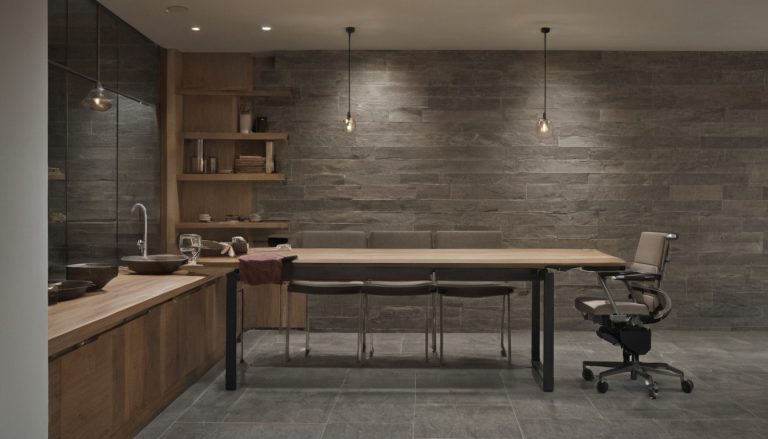
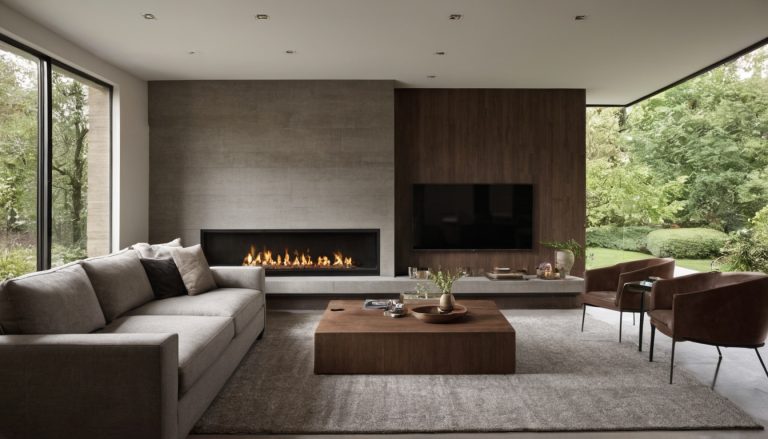
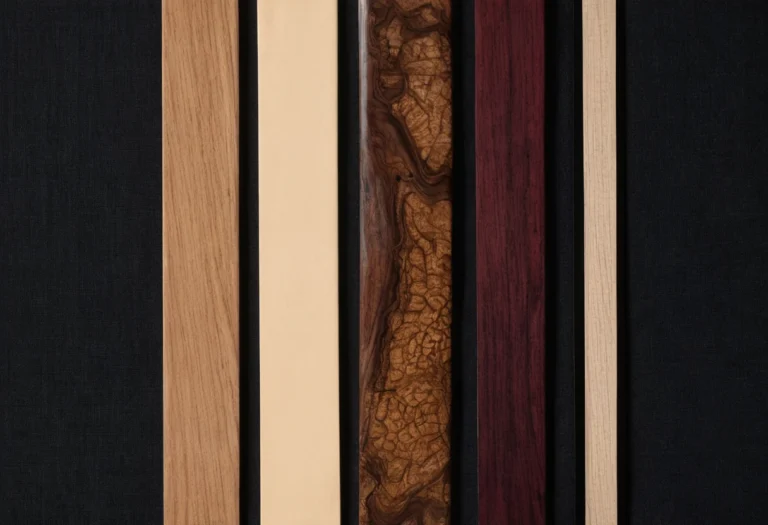
Place a newly unpacked leather chair, veneered cabinet, or dyed sofa in the wrong sun patch and one exposed face may fade, heat, or move differently from the rest. The safest position is outside recurring direct sunlight, away from the hottest glazing, and selected from recorded light, surface temperature, air temperature, and relative-humidity readings.
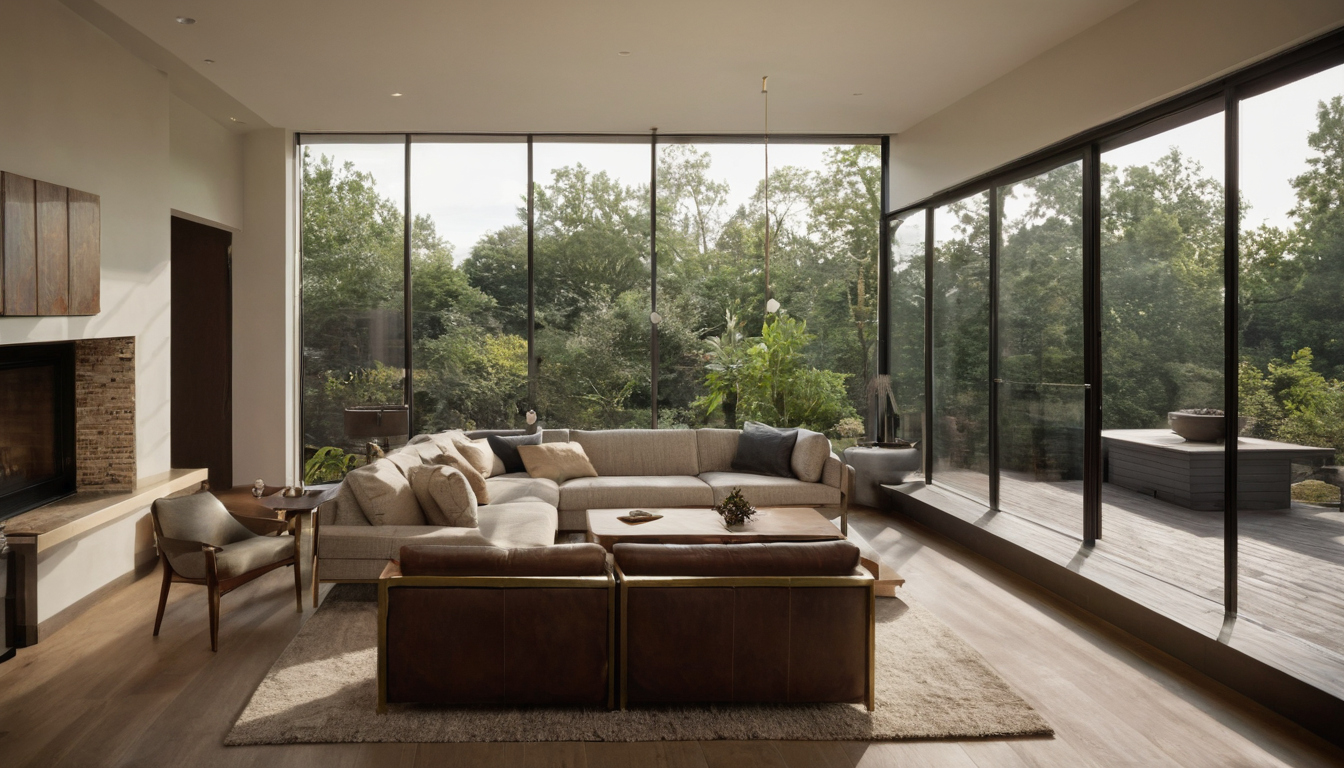
Where should sunroom furniture sit to limit fading and heat damage shown with finish, fixture, and clearance relationships visible.
Where should sunroom furniture sit to reduce fading and heat damage?
Sunroom furniture should occupy the lowest-exposure position compatible with circulation and normal use, rather than the position with the best view alone.
- First choice: a position receiving no recurring direct sunlight during the hours when the sunroom is used.
- Second choice: the candidate position with lower measured illuminance, expressed in lux, after shades and blinds are set as they normally will be.
- Third choice: the position with the lower peak furniture-surface temperature, not merely the greater distance from glass.
- Fourth choice: an area with steadier air temperature and relative humidity, especially for veneer, bonded panels, joints, leather, and finished wood.
- Last consideration: the preferred outlook, provided circulation and normal furniture operation still work.
Recurring direct sunlight is the first placement constraint
Direct sunlight concentrates visible light and solar heat on one part of a chair, cabinet, or sofa. Diffuse and reflected daylight are less intense, but repeated exposure can still produce cumulative color change. The National Park Service Museum Handbook addresses collection use in exhibits and furnished historic structures. The Department of the Interior also describes Conserve O Grams as an ongoing series of focused care leaflets, published since 1993, covering materials that include furniture and leatherwork. Neither source supplies a universal residential placement distance.
Window direction predicts timing, not safety. In the Northern Hemisphere, south-facing glazing often admits more midday sun, while north-facing glazing usually receives less direct sun. The relationship reverses in the Southern Hemisphere. East glazing brings morning sun, and west glazing brings later sun that may coincide with an already warm room. Roof overhangs, trees, neighboring buildings, season, latitude, shades, and glazing alter those patterns.
Distance from glass cannot define a safe position because low-angle sunlight may reach deep into a room, while effective shading may protect a nearer location. Conservation guidance treats light, temperature, and relative humidity as separate controls. The published Museum Handbook update summary discusses updated light standards and temperature and humidity guidance, but provides no numerical residential limits. The practical next step is to map the room.
How do you map light and heat exposure before arranging a sunroom?
A useful exposure map records where direct sun falls, how long it remains, and how illuminance, surface heat, air temperature, and relative humidity differ among proposed furniture positions.
Ultraviolet radiation, visible light, and solar heat are separate exposure variables
Ultraviolet radiation can contribute to material degradation, while visible light can also drive photochemical color change. Solar radiation can raise surface temperatures. Glazing specifications therefore separate ultraviolet transmission, visible-light transmission, and solar heat gain. Strong UV filtering does not prove that a position is fade-proof or cool.
Which readings belong on a practical sunroom exposure map?
- Mark candidate positions with painter’s tape beside glazing, behind an operating shade, and in the room interior. Include the intended heights of chair backs, cabinet faces, tabletops, and upholstery.
- Sketch a floor plan. Record the date, location, hemisphere, window orientation, weather, glazing description, shade position, and heating or cooling status.
- At consistent intervals, photograph each position and note when direct sun starts and finishes. Measure illuminance in lux, furniture-surface temperature, nearby air temperature, and relative humidity.
- Record each instrument’s model, stated accuracy, range, and infrared-thermometer emissivity setting. Treat homeowner readings as comparative rather than laboratory results. Check a phone light sensor against a calibrated meter before relying on its lux values.
| Position | Direct-sun period | Peak lux | Peak surface temperature | Air temperature | Relative humidity | Observed risk |
|---|---|---|---|---|---|---|
| Near glazing | Record | Record | Record | Record | Record | Assess |
| Behind shade | Record | Record | Record | Record | Record | Assess |
| Room interior | Record | Record | Record | Record | Record | Assess |
When should the sunroom survey be repeated?
Repeat the survey during representative clear and cloudy periods, concentrating on the expected daily exposure peak instead of assuming one universal clock time. Survey again after a season change, leaf loss, tree removal, glazing replacement, shade installation, or a change in heating and cooling operation. The resulting zones can then be matched to furniture construction.
Wood, veneer, leather, and upholstery require different sunroom positions
Rank sunroom furniture by construction and documented sensitivity, not by broad indoor or outdoor labels. Dyed textiles and leather can change color, while finished wood and veneer can develop uneven color, coating deterioration, heating, and moisture-related movement.
| Material | Light exposure | Surface heat | Environmental fluctuation | Conditional placement |
|---|---|---|---|---|
| Solid wood | Color and finish may change unevenly | Dark surfaces can become hot | Wood expands and contracts as moisture content changes | Indirect light with stable room conditions |
| Veneer or composite | Uneven change can reveal protected outlines | One-sided heating can stress layered construction | Veneer and substrate may respond differently | Protected interior position |
| Leather | Dyes and finishes may fade | Heating can promote drying and finish damage | Repeated changes can affect flexibility | Shade, away from hot glazing |
| Natural-fiber upholstery | Often vulnerable to cumulative fading | Heat can accelerate deterioration | Dampness can encourage odor or biological growth | Consistent shade |
| Synthetic upholstery | Resistance varies by fiber, dye, and test result | Heat tolerance varies by product | Moisture response depends on filling and construction | Only where care data support exposure |
| Documented outdoor-rated fabric | Tested resistance is not immunity | Dark colors can still heat | Cushion interiors must dry properly | Brighter zone if specified use permits it |
Veneered and composite furniture needs protection from uneven heating and moisture change
Veneer is a thin decorative wood layer bonded to a substrate. Veneer thickness, substrate type, adhesive, edge sealing, and finish condition all affect performance. Uneven sun can heat one face while the reverse remains cooler. Place valuable veneered pieces outside recurring sun unless the manufacturer documents suitable conditions. Do not apply a generic temperature limit without product data.
The National Park Service provides preservation, documentation, access, and use guidance through its Museum Handbook. The related collections-environment chapter addresses varied collection types, climates, and buildings, including furnished historic structures, but does not establish one exposure limit for residential furniture. Manufacturer instructions for the actual piece should govern. Species identification can help document existing appearance; see how furniture woods differ in color and appearance.
Leather and upholstery need shade even when glass filters ultraviolet radiation
UV reduction does not remove visible light or solar heating. Leather, textiles, dyes, coatings, foam, and backing materials respond differently, so a performance or outdoor label does not make a sofa safe behind hot glass. Without product-specific limits, choose shade and the coolest stable position.
Moisture and fresh treatment products need separate attention. The U.S. Environmental Protection Agency moisture guide advises correcting condensation and wet or damp spots promptly. The EPA also identifies furnishings, varnishes, waxes, paints, and cleaning products as potential indoor VOC sources and recommends increased ventilation while VOC-emitting products are used. Do not treat a closed, heated sunroom as a suitable curing area without checking the product instructions.
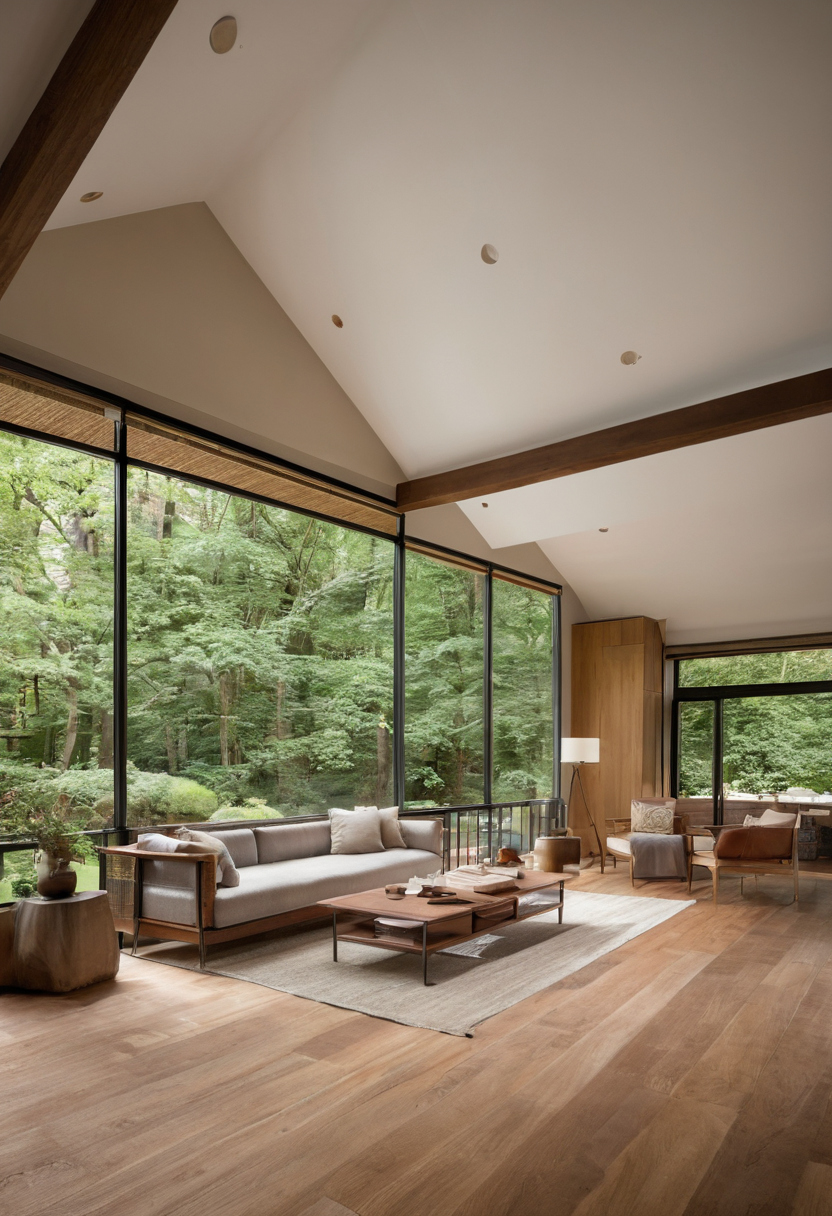
Wood, veneer, leather, and upholstery require different sunroom positions shown as an editorial reference for proportion and finish coordination.
A zone-based furniture layout keeps vulnerable pieces out of the highest-exposure areas
A practical layout assigns the darkest, coolest measured zone to valuable or light-sensitive furniture and reserves brighter perimeter positions for documented, replaceable pieces. Overlay the exposure map on circulation measurements while keeping doors, vents, radiators, and operating shades clear.
The protected interior zone suits the most light-sensitive furniture
Place heirloom wood, veneer, leather, and delicate upholstery in the protected interior zone only when the survey shows no recurring direct sun and lower illuminance and surface temperature than perimeter positions. Check skylights, clerestories, and reflected light because the room’s center is not automatically protected.
| Zone | Conditional placement |
|---|---|
| Protected interior | Valuable, veneered, leather, or light-sensitive pieces |
| Intermediate diffuse light | Stable furniture whose care instructions permit the measured exposure |
| High-exposure perimeter | Replaceable or specifically rated products suited to the recorded light and heat |
Hypothetical move-in example: In a Northern Hemisphere sunroom with south-facing glazing, an open west-side traffic route, and shades lowered during peak sun, the veneered cabinet goes in the measured interior zone while documented outdoor-rated seating occupies diffuse light. Before buying additional seating, check sofa and chair clearances before buying.
The window zone suits only furniture matched to its measured exposure
Window-zone furniture needs documentation tied to the exact product or fabric. Read the stated fade or lightfastness test, exposure duration, temperature conditions, intended use, and warranty exclusions. Films, shades, and specialized glazing may improve the zone, but each controls only part of the exposure.
Window films, shades, and glazing reduce specific exposures but do not make every position safe
Solar-control glazing, applied film, exterior shading, and interior shades address different parts of sunroom exposure. Product data should distinguish ultraviolet transmission, visible transmittance, and solar heat gain, while glass compatibility and warranty terms must be confirmed before modifying an insulated or coated unit.
UV rejection does not equal fade-proof or heat-proof glazing
Visible transmittance describes the fraction of visible light passing through glazing. Solar heat gain coefficient describes how much incident solar energy enters as heat. Neither measurement equals ultraviolet rejection. Susceptible dyes, leather finishes, and wood coatings can still change under cumulative visible light and elevated surface temperature. Conservation guidance recommends rotating exhibited objects to reduce light exposure, although the summary specifies no residential interval.
Exterior shading usually intercepts solar energy before it reaches the room
| Control | Main exposure addressed |
|---|---|
| Exterior shade | Direct beam, solar heat gain, and surface heating |
| Interior shade | Direct beam and visible light; absorbed heat remains indoors |
| Operable blind | Adjustable beam and glare control |
| Solar-control film | Product-specific UV, visible-light, and solar-heat control |
| Low-emissivity glazing | Configuration-specific heat transfer and solar gain |
| Furniture cover | Light reaching the covered surface |
Before applying aftermarket film, identify whether the glass is annealed, tempered, laminated, tinted, low-emissivity, or insulated, then obtain written compatibility and warranty confirmation. Exterior systems must also suit wind exposure, mounting requirements, maintenance access, and emergency egress. Remap the room after any control is installed.
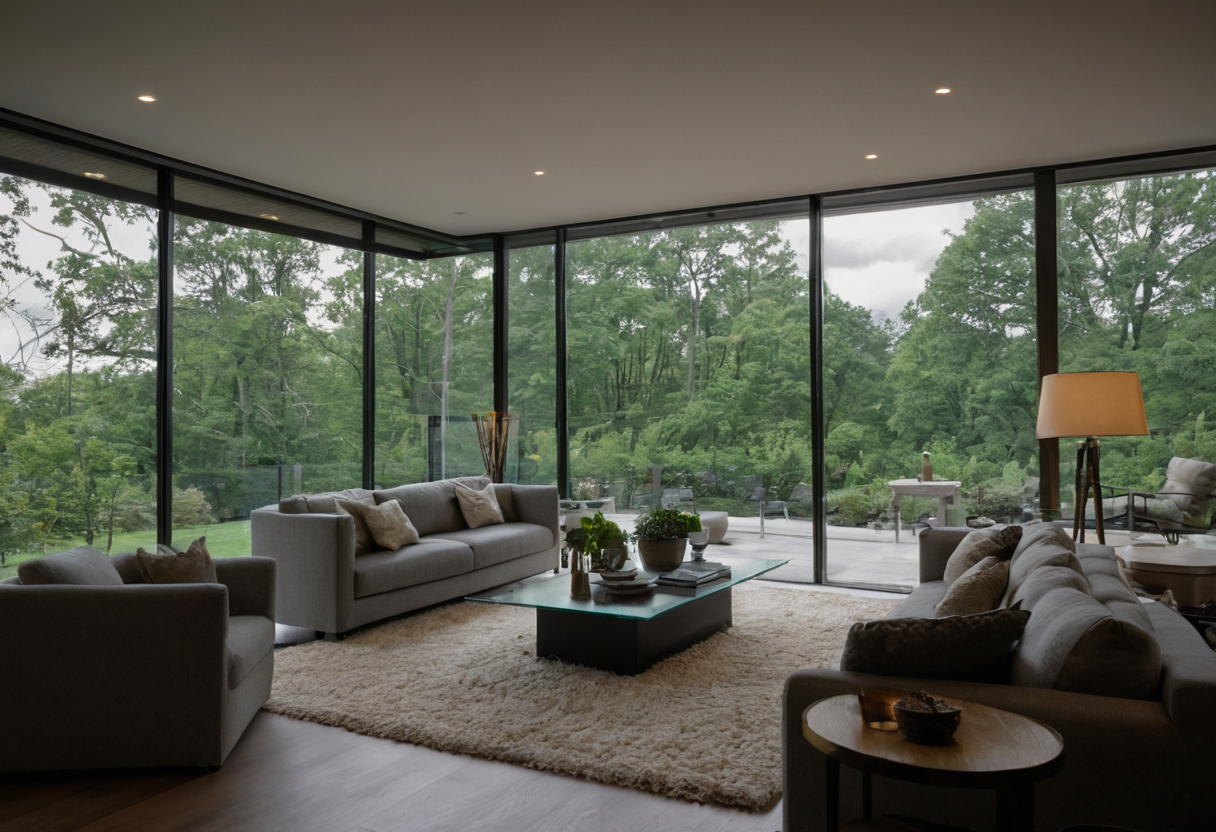
Window films, shades, and glazing reduce specific exposures but do not make every position safe shown with floor, wall, and fixture relationships visible.
A final sunroom placement check can be completed before furniture stays in place
Before leaving furniture in position, verify the direct-sun path, peak readings, shade clearance, air circulation, and manufacturer care instructions. Photograph the arrangement and plan another review because seasonal sun angles, foliage, glazing, ventilation, and shade use can alter exposure.
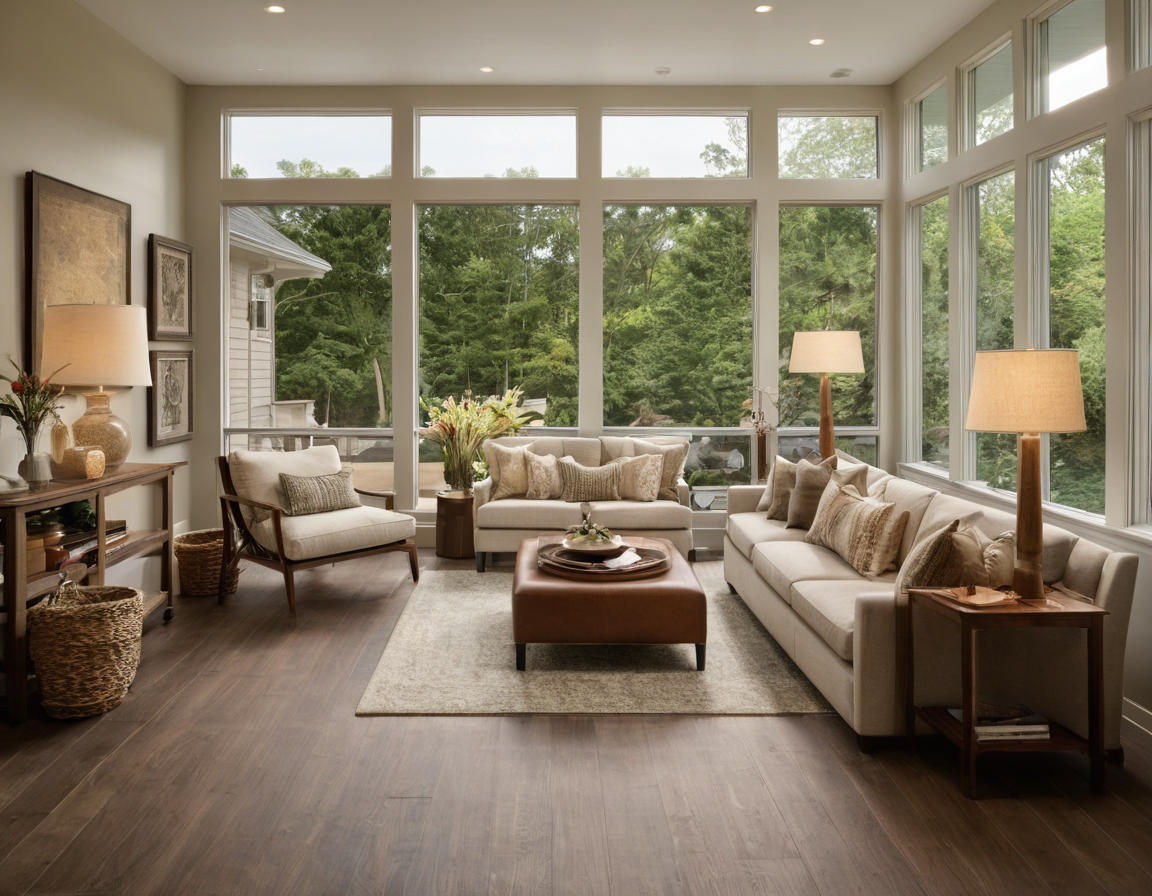
A final sunroom placement check can be completed before furniture stays in place shown as an editorial reference for proportion and finish coordination.
Existing damage should be documented before changing the sunroom layout
- Inspect for uneven fading, lifting veneer, active splits, brittle or flaking finish, dry or powdering leather, weakened upholstery, and unstable joints. Do not assign a cause from appearance alone.
- Photograph each piece overall, at mid-range, and close up. Label files with the date, room position, and affected area.
- Confirm that shades operate without touching furniture and that vents remain open.
- Do not apply untested cleaners, oils, dyes, coatings, or adhesives. The National Park Service maintains and revises its Conserve O Gram guidance for professionals and family curators.
- Refer lifting veneer, active splits, flaking finishes, powdering leather, tears, or unstable joints to the appropriate conservator, upholsterer, leather specialist, manufacturer, or glazing professional.
Rotation may distribute exposure, but it does not prevent cumulative damage. Keep each piece only where the recorded conditions suit its material, then reassess as the room changes.
Frequently asked questions
How can I keep the sun from fading furniture in an enclosed sunroom?
Keep vulnerable furniture outside recurring direct sun, operate shades consistently, and compare lux and surface-temperature readings among candidate positions. Covers and rotation can reduce uneven exposure but do not stop cumulative change.