Eight species and figure types account for the overwhelming majority of high-end classic and contemporary furniture: walnut, cherry, oak, bird’s-eye maple, mahogany, Makassar ebony, rosewood and the burl veneers. Each behaves differently under the hand, under light and under decades, and each has its own buying traps. This field guide profiles all eight in a fixed card format (character, touch, best use, aging, what to check before paying), then compresses the data into one comparison table and closes with the seven workshop terms every buyer should command. For readers studying how this level of craft appears in current production, Modenese Furniture is a useful reference point for Italian classic furniture, carving, finishes and room-scale collections.
Walnut: The Default Language of Fine Furniture
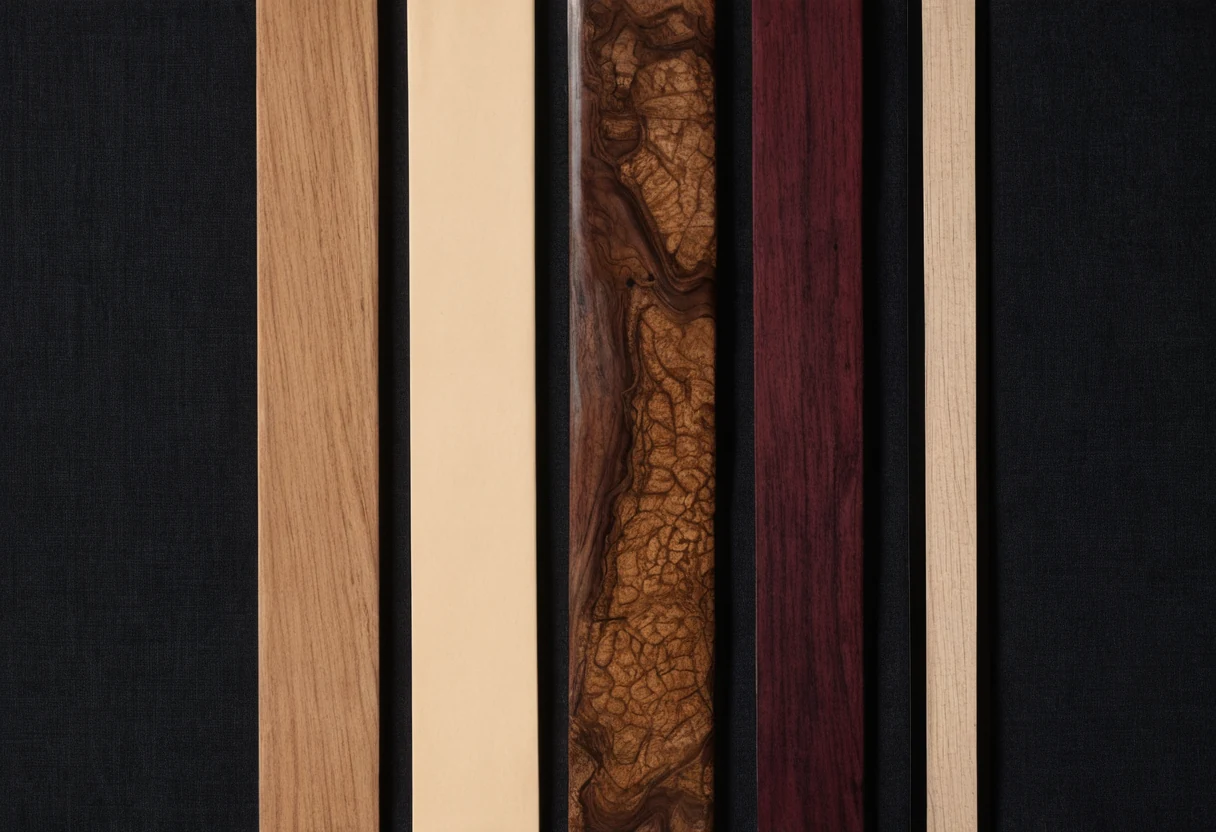
Character: European and American black walnut run from grey-brown to deep chocolate with occasional purple cast and lively, sometimes curly figure. Touch: fine, slightly open grain that polishes to a soft satin rather than glass. Best use: carved frames, desks, dining tables; walnut’s Janka hardness near 1,010 lbf and density near 650 kg/m³ make the wood hard enough to wear and soft enough to carve crisply, the balance that made walnut the carver’s default for five centuries. Aging: contrary to instinct, walnut lightens with UV exposure, drifting toward warm honey over 20 to 40 years. Check before buying: color consistency across components (walnut is frequently steamed to blend sapwood) and, on carved pieces, crisp arrises in the ornament, soft edges signal sanding shortcuts after machine roughing.
Cherry: The Wood That Finishes Itself
Character: straight, calm grain with a warm pink-amber tone and small dark pitch flecks. Touch: closed grain, glass-smooth even with thin finishes. Best use: bedroom suites, interiors of cabinets, American classics. Aging: the species’ defining behavior: cherry darkens dramatically and fast, reaching a deep russet within 6 to 24 months of light exposure; a sample shown in a dim showroom is a different color from the delivered piece’s second year. Check: ask for an aged sample next to a fresh one, and confirm whole-piece exposure plans, a vase left in place for a year leaves a permanent pale ghost on a cherry top.
Oak: Structure Made Visible
Character: pronounced open grain; quarter-sawn boards display ray fleck, the silvery ribbons prized in everything from Gothic revival to Arts and Crafts. Touch: distinctly textured; even under full-gloss finishes the grain telegraphs. Best use: libraries, paneling, refectory tables, anywhere architecture and furniture must agree; white oak’s ~1,360 lbf Janka and 755 kg/m³ density carry hard daily service. Aging: ambers steadily; high-tannin oak also reacts with iron and alkalis, the chemistry behind both antique fuming and accidental black stains. Check: sawing orientation (quarter-sawn costs more and moves less), and on “solid oak” claims, look at end grain continuity around corners.
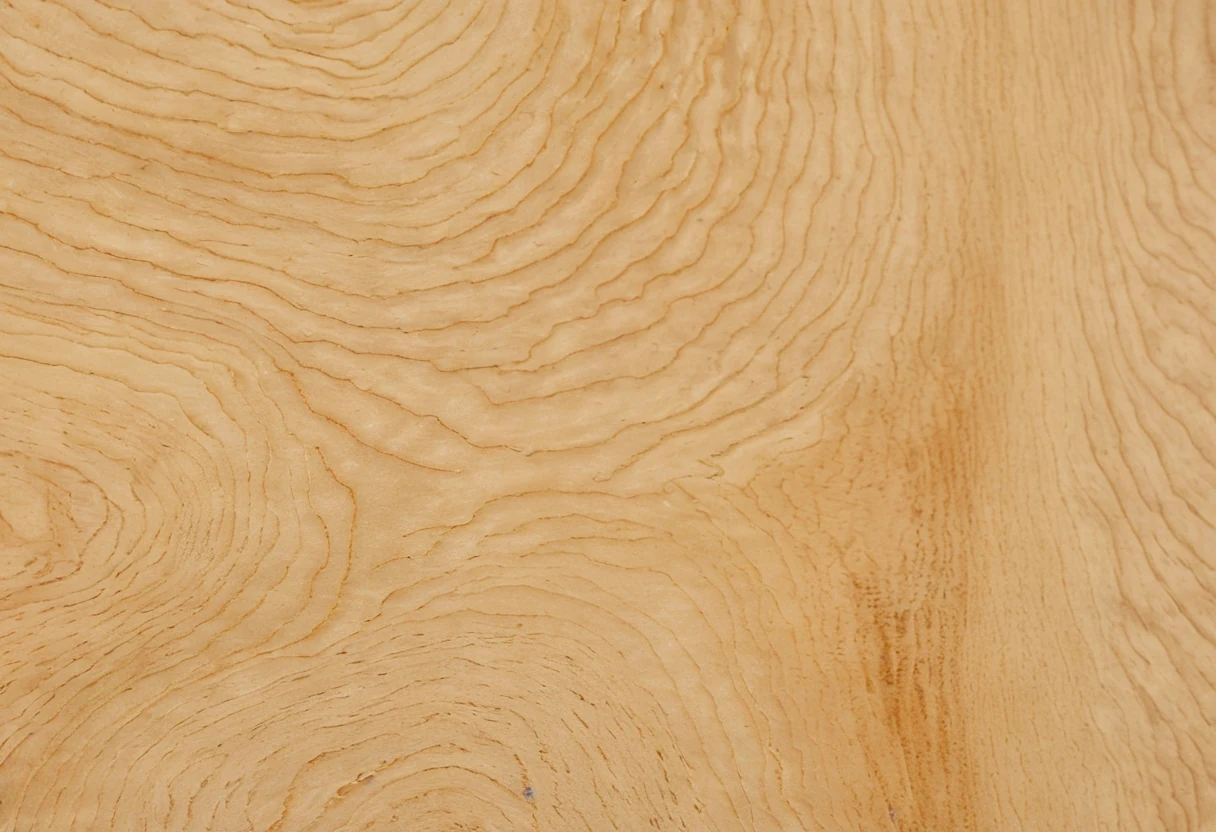
Bird’s-Eye Maple: The Accident Nobody Can Plant
Character: hard (sugar) maple, pale cream to gold, peppered with small swirling “eyes”; the figure is a growth anomaly that cannot be cultivated deliberately, which keeps supply scarce. Touch: dense and cool; Janka ~1,450 lbf, density ~705 kg/m³. Best use: veneered panels, interiors of luxury cabinets, Biedermeier and Art Deco revival pieces. Aging: mellows from cream toward pale amber; the eyes gain contrast. Check: eye density and distribution (tight, even fields command multiples of sparse ones) and core flatness on veneered panels, figured maple veneer telegraphs any substrate sin.
Mahogany: The Carver’s Aristocrat With a Passport Problem
Character: genuine mahogany (Swietenia) shows straight to ribbon-striped grain in copper to red-brown; the 18th century’s favorite carving wood for the same reason as walnut, stability plus crisp detail at a friendly ~900 lbf Janka. Best use: reproduction and period furniture, carved dining chairs, veneered casework. Aging: deepens handsomely to dark red-brown. Check: the word itself. Big-leaf mahogany is listed in Appendix II of CITES, so legal stock carries paperwork, and much of what retails as “mahogany” is actually sapele, sipo or khaya, respectable African relatives, but different woods at different prices. Demand the botanical name on the specification.
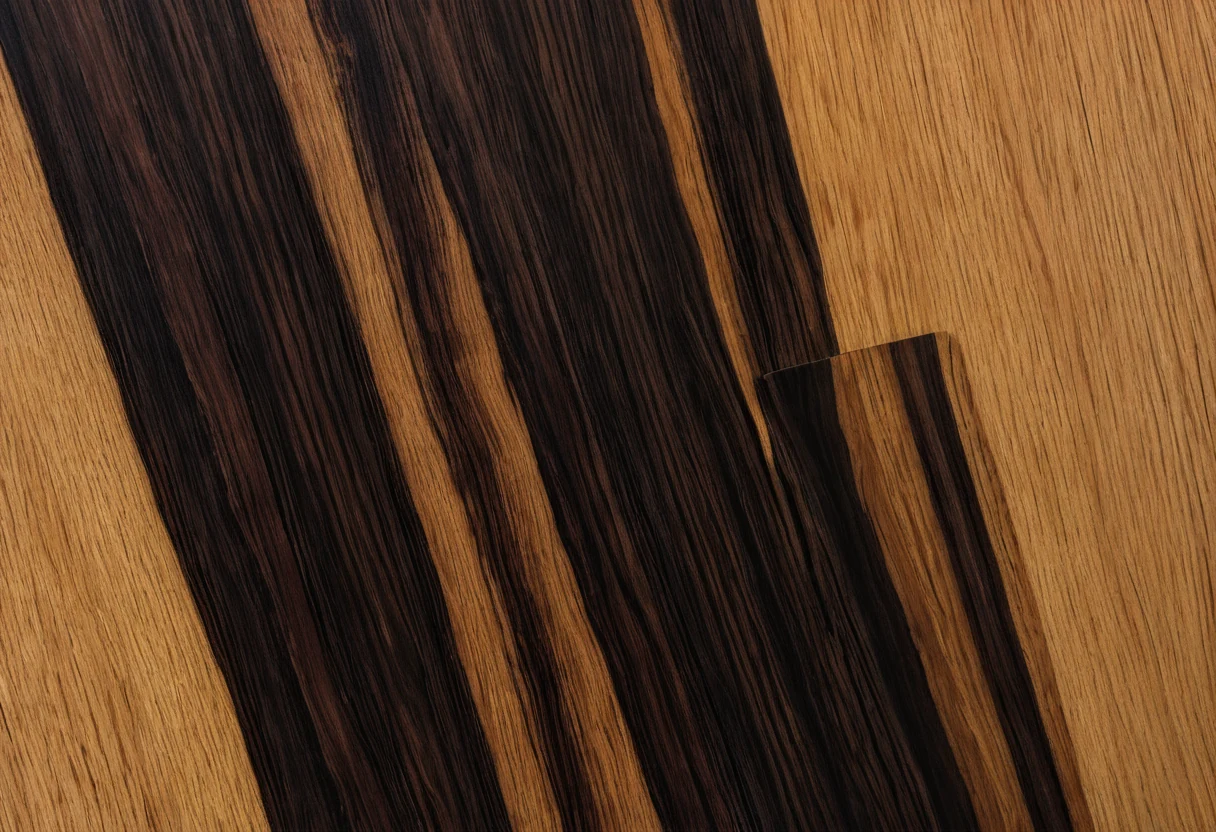
Makassar Ebony: Architecture in Stripes
Character: the Sulawesi ebony (Diospyros celebica) alternates near-black and tan-brown stripes; no other commercial wood produces that graphic authority. Touch: exceptionally dense (~1,100 kg/m³, Janka ~3,220 lbf), cold and glassy under the hand, polishes like stone. Best use: Art Deco revival, contemporary luxury casework, accents and inlay; almost always as veneer, both for cost and because large solid sections of ebony crack. Aging: highly stable in color; the finish, not the wood, sets the long-term look. Check: stripe continuity across doors and panels (a pattern jump betrays careless flitch management) and sourcing: Makassar ebony is not CITES-listed but is assessed as vulnerable in the wild, so serious houses document legal, managed-forest origin.
Rosewood: The Regulated Beauty
Character: Dalbergia species (Indian rosewood foremost in legal trade) show dark chocolate-violet grain with black ink lines and a faint sweet scent when worked. Touch: oily, dense (~850 kg/m³, Janka ~2,440 lbf), polishes superbly. Best use: inlay, banding, small precious surfaces, music-room furniture. Aging: darkens toward uniform deep brown; strong figure contrast softens over decades. Check: legality above all. Every Dalbergia species has sat in CITES Appendix II since 2017; reputable makers supply species certification and import documentation as a matter of course, and a seller who shrugs at the question is selling either illegal wood or a different genus.
Burl Veneers: The Tumor That Outprices the Tree
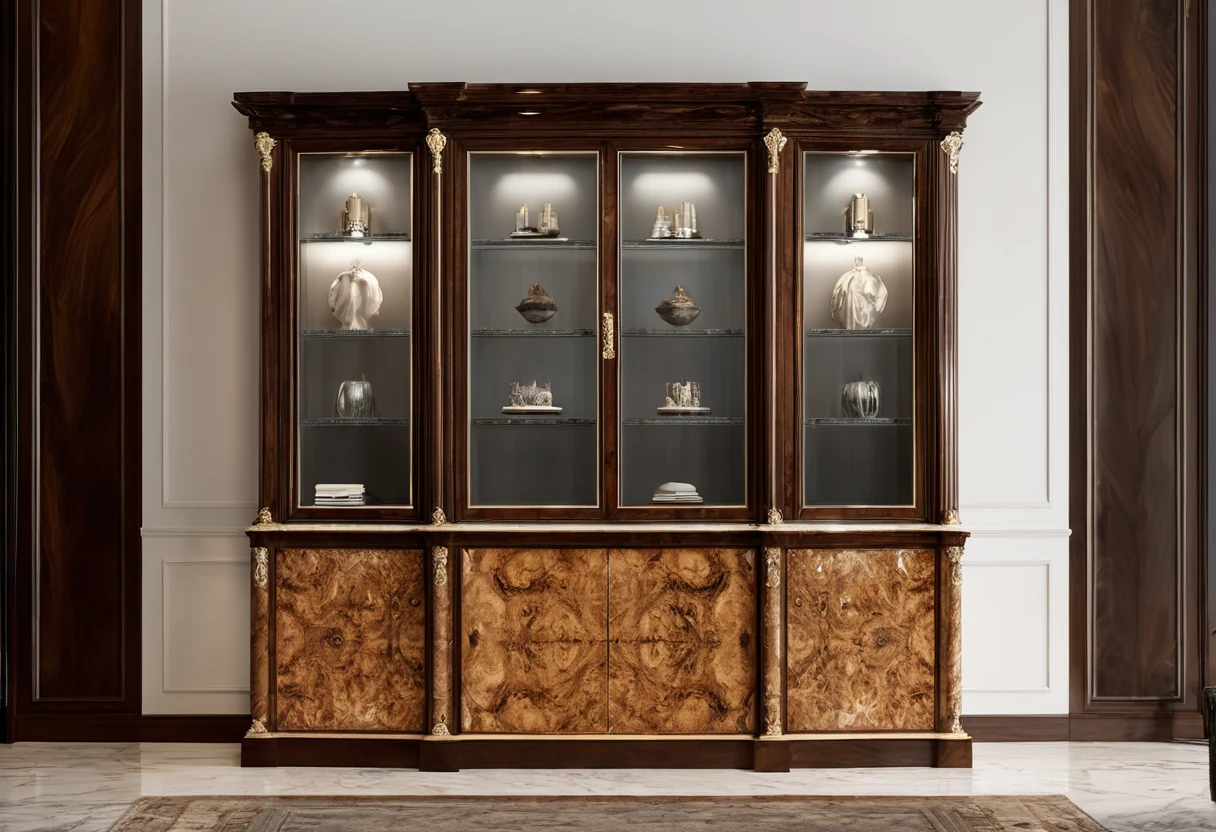
Character: burls (walnut, amboyna, madrona) are growth anomalies sliced into veneers of swirling, marbled figure; amboyna burl is among the most expensive veneers on earth. Touch: irrelevant in the solid, burl is structurally chaotic and is used exclusively as veneer of roughly 0.5 to 0.6 millimeters over stable cores, which in burl’s case is correct engineering, not economy. Best use: bookmatched door and drawer fronts, desk tops, dashboard-grade interior panels. Aging: follows its species; finishes matter more than fiber. Check: the match. Four-way bookmatching with mirrored seams is the craft benchmark; mismatched figure at the centerline is the first thing a trained eye, and eventually yours, will never unsee.
The Eight Woods Side by Side
| Wood | Janka (lbf) | Density (kg/m³) | Signature figure | How it ages | Price tier |
|---|---|---|---|---|---|
| Walnut | ~1,010 | ~650 | Chocolate, curl | Lightens to honey | High |
| Cherry | ~950 | ~570 | Calm, pitch flecks | Darkens fast to russet | Mid-high |
| White oak | ~1,360 | ~755 | Ray fleck (quartered) | Ambers; reacts with iron | Mid-high |
| Bird’s-eye maple | ~1,450 | ~705 | Eye figure | Cream to pale amber | High (figured) |
| Mahogany (Swietenia) | ~900 | ~570 | Ribbon stripe | Deepens red-brown | High, CITES II |
| Makassar ebony | ~3,220 | ~1,100 | Black/tan stripes | Stable | Very high |
| Rosewood (Dalbergia) | ~2,440 | ~850 | Ink-line grain | Darkens, evens out | Very high, CITES II |
| Burl veneers | n/a (veneer) | varies | Marbled swirl | Per species | Top (amboyna) |
Seven Workshop Terms That Change How You Shop
| Term | Meaning, and why it matters at the invoice |
|---|---|
| Solid wood | Full-thickness timber; right for frames and carving, wrong for wide unstable panels |
| Veneer | 0.5-0.6 mm sliced figure over a stable core; engineering, not cheating, when the core is honest |
| Marquetry | Pictures assembled from veneers; priced by piece count, hundreds of hours at the top end |
| Intarsia | The older inlay-into-solid technique; thicker elements, sculptural relief |
| Burl | Figured growth anomaly, always veneered; graded by figure density |
| Bookmatch | Mirror-imaged consecutive veneer leaves; check the centerline seam |
| Quarter-sawn | Boards cut radially: straighter grain, less movement, ray fleck in oak; costs more, warps less |
One habit unites everyone who buys wood well: they ask each piece the species question, the cut question and the paperwork question before the price question. Workshops that publish their wood selection process answer all three unprompted, which is precisely the point of asking.